Base44 Encoding Explained: Compact Data Representation for Modern Systems
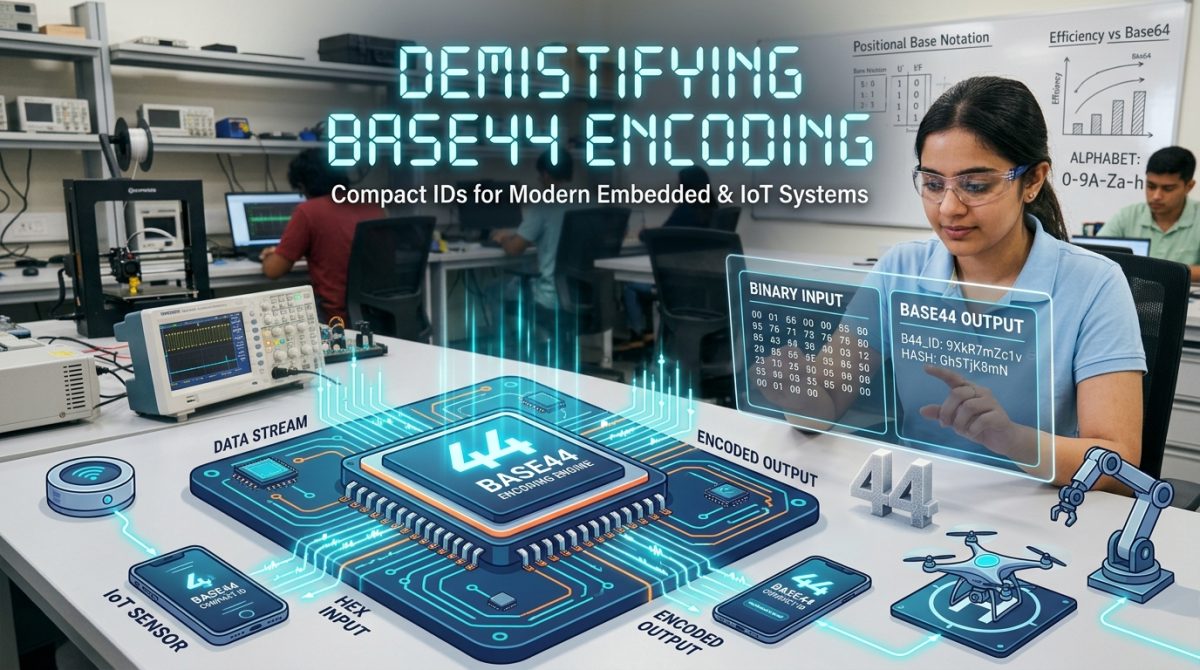
Base44 converts binary data into a 44-character alphanumeric format. It offers higher density than Hexadecimal and avoids special symbols or easily confused characters. This makes Base44 ideal for hardware displays, compact QR codes, clean web URLs, and short serial keys in embedded IoT devices.
Base44 is a lightweight numbering and data encoding standard designed to convert binary information into a compact 44-character set. While conventional web systems rely on Base64 or hexadecimal formats, Base44 offers a balanced approach for hardware-constrained systems, small screens, and URL-safe data transmission. This article breaks down why Base44 is important and how it is actively used in modern electronics and embedded devices.
1. What Makes Base44 Important?
In embedded systems and Internet of Things (IoT) devices, memory space, screen size, and transmission bandwidth are strictly limited. Base44 addresses key design challenges in these environments:
Compact Efficiency: It packs significantly more information into fewer characters compared to traditional Hexadecimal or Decimal notations.
Human Readability: By using a constrained 44-character alphabet (typically numbers and non-confusing letters), generated strings remain readable and easy to type or verify manually.
URL & Web Safety: The character set eliminates special symbols like plus signs (`+`), slashes (`/`), or equals signs (`=`), making Base44 strings directly usable in web links, API keys, and parameter strings without requiring special encoding.
No Display Ambiguity: It avoids characters that look identical on simple dot-matrix or segment displays (such as `0` vs `O` or `1` vs `l`), reducing user error during manual system inputs.
2. Practical Applications & Real-World Use Cases
Base44 is used wherever short, reliable, and hardware-friendly data representation is required:
Short Serial Numbers & Hardware IDs: Microcontrollers and IoT sensor nodes use Base44 to generate short device identification keys that fit on small labels or alphanumeric OLED screens.
Compact QR Code Payloads: Standard QR codes carry less data as pixel complexity increases. Encoding registration tokens or sensor readings in Base44 allows QR codes to stay low-density and scan instantly.
Alphanumeric Hardware Displays:Simple LED panels, character LCDs, and industrial controller screens can easily render Base44 strings without needing complex graphics drivers.
Short URL Slugs & Tracking Tokens: Web services and IoT telemetry gateways use Base44 to convert database primary keys into clean, short URLs for rapid status lookups.
Firmware Authorization Keys: Product activation and license keys flashed into embedded board EEPROMs use Base44 to keep license strings concise and easy for technicians to enter manually.
Conclusion
Base44 serves as a practical bridge between the raw binary world of microcontrollers and human-readable interfaces. By maximizing data density while keeping characters simple and display-friendly, Base44 continues to play an important role in modern embedded engineering, IoT telemetry, and hardware UI design.