Top 10 IoT projects using ESP32
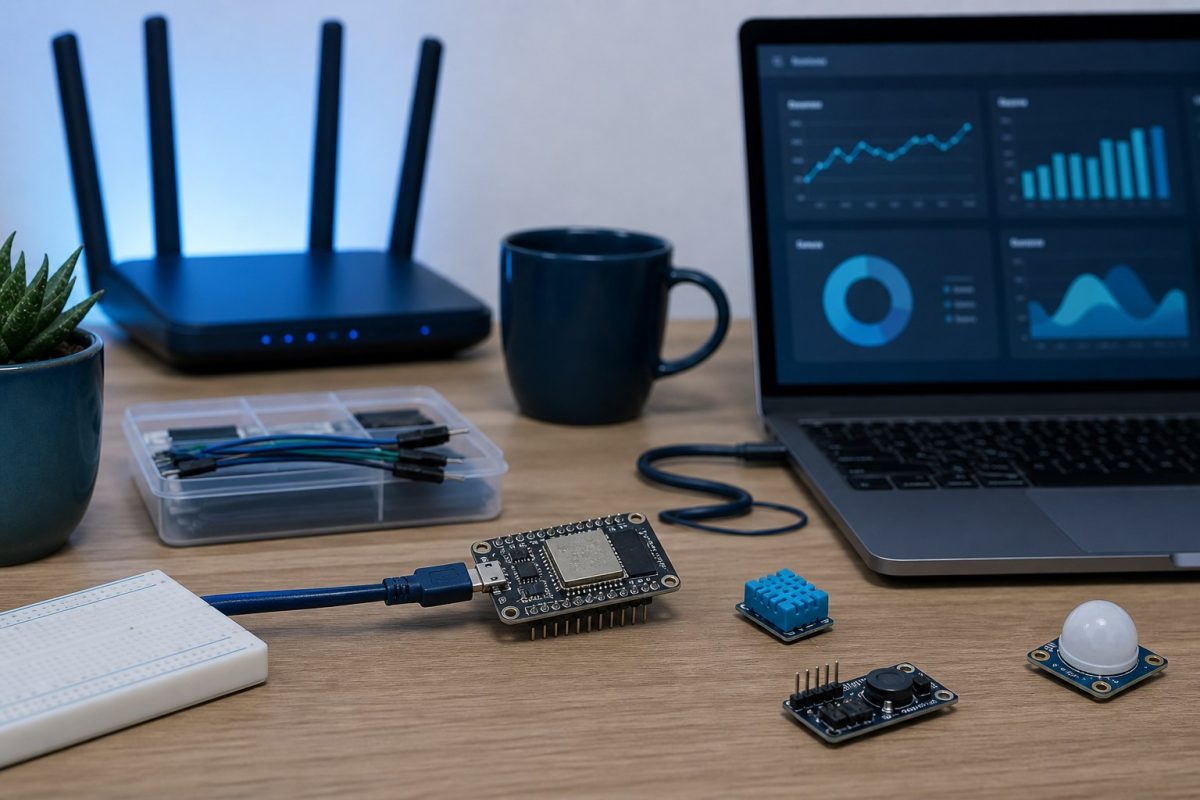
Ten connected ESP32 builds: MQTT climate, irrigation, air quality, energy, GPS trackers, BLE bridges, and a sensor gateway. Shop boards and sensors, then talk to the network.
IoT on ESP32 means the board is not only blinking an LED. It measures something, joins Wi-Fi or BLE, and sends or receives data. The ten projects below are the ones we use to teach that path: from a single MQTT topic to a small gateway.
Classic ESP32 is enough for most of these. Use ESP32-S3 if you want extra GPIO, USB, or a camera. Shop the MCU and sensors here. Print an enclosure or request a PCB when the node leaves the breadboard.
1. MQTT climate node
SHT31 or DHT22 plus optional BMP280. Publish temp, RH, and pressure to Home Assistant or any broker every minute. Deep sleep if it runs on a 18650.
This is the first real IoT node: one topic, retained messages, and a chart on your phone.
2. Wi-Fi energy monitor
PZEM-004T or a CT clamp into a safe analog front-end. Post watts, volts, and kWh over MQTT. Calibrate against a known load.
Mains stays in a closed box. The ESP32 only sees UART or a scaled ADC. Shop a current module, not a bare CT into GPIO.
3. Soil and irrigation controller
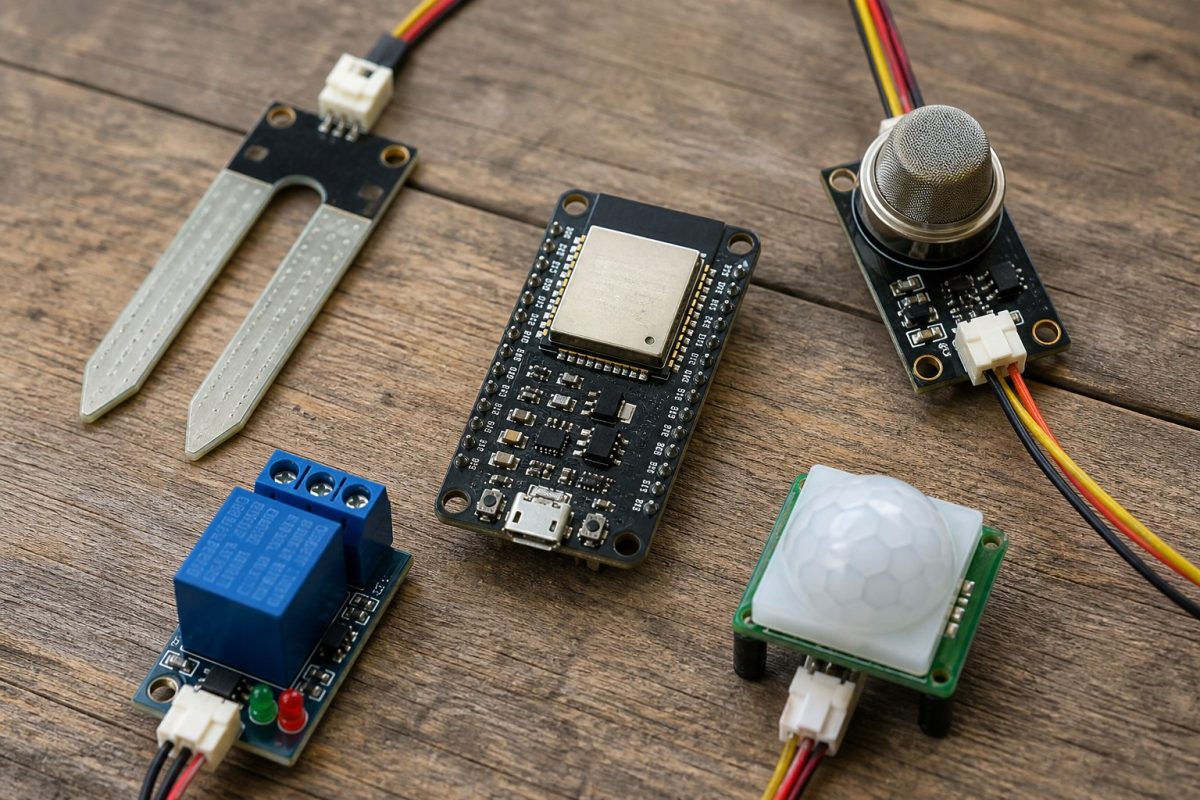
Capacitive soil probe, a 12 V solenoid or pump on a relay, and a schedule plus a moisture threshold. Add a rain skip if you have a cheap rain bucket or a weather API.
12 V is separate. GPIO only drives the transistor. Good outdoor IoT if you conformal-coat and use a glanded box.
4. Occupancy and door node
PIR plus a reed switch. MQTT binary sensors for motion and door. Optional mmWave if you need presence that survives a still person.
Use this to turn lights off and to log shop hours. Keep PIR away from HVAC vents.
5. Indoor air quality station
PMS5003 or SPS30 for PM2.5, plus SGP30 or SCD40 for VOC / CO2. Stream to MQTT and set a fan relay when PM spikes.
5 V for the laser sensor. UART for PMS. This is a strong science-fair and lab-air project.
6. GPS asset tracker
NEO-6M or a GNSS module on UART, plus Wi-Fi (or a SIM7000-class LTE board if you leave the house). Post lat/lon and battery. Geofence in software, not in the MCU if you can.
Antenna on the sky side of the box. Deep sleep between fixes to save the cell or the 18650.
7. BLE to Wi-Fi bridge
Scan cheap BLE thermometers or beacons, then publish them on MQTT over Wi-Fi. One ESP32 becomes many sensors without extra wiring.
Classic ESP32 BLE + Wi-Fi coexistence works if you do not hammer both at full rate. S3 is more comfortable.
8. Smart plug / latching relay with telemetry
Relay or SSR for a load, plus optional current sense. MQTT command topic and a state topic. Local button still works if Wi-Fi dies.
Do not put mains on a breadboard. Use a certified socket module or a closed 3D-printed box with strain relief.
9. Camera IoT snapshot
ESP32-CAM or S3 + OV2640. PIR or MQTT trigger, JPEG to an HTTP endpoint or MQTT (small frames). Stills beat live video for a first product.
5 V that does not droop on TX. Shop a camera module after climate and MQTT already work.
10. Modbus / UART sensor gateway
Talk to a cheap RS485 meter, inverter, or PLC-adjacent sensor, then expose registers as MQTT. This is the IoT bridge between a bench MCU and plant-ish hardware.
Use a MAX485 module, isolated if the field is noisy. Keep 24 V off the ESP32. When the protocol is stable, move it to a custom PCB.
How to run them as IoT, not as demos
1. One broker (Mosquitto or HA). One naming scheme: home/room/node/metric.
2. TLS later; get plaintext MQTT working on your LAN first.
3. Watchdog and reconnect. Wi-Fi will drop.
4. OTA only after a hardware UART or USB escape hatch exists.
5. Power: 5 V brick or a real Li-ion gauge. USB hubs fail in the field.
Start with project 1. Add 4 or 5 next. Camera and GPS last.